

Students cheating on assignments has never been a rare occurrence; whether an assignment is late or a student lacks motivation, AI and other resources are utilized by students on assignments. But how did they do it before those resources were so readily available to them? And for the ones that were, how did they get away with it?
“The cheating policy was very similar to how it is today,” Brock LaPlante, alumni, science teacher, said. “There are certain punishments for each offense such as losing opt outs and getting DRs. The only difference is there wasn’t AI back then.”
LaPlante reflects on their own high school years, from 2014 to 2018, and notes that even before smartphones were allowed in classrooms, cheating was still common amongst the student body.
“Kids would definitely still cheat,” LaPlante said. “Today you’d definitely get caught, but my peers back then would create a little cheat sheet on their hand or even, if they had one of those fancy calculators, they’d put stuff in there and then go to the previously typed screen and input all the answers onto the screen. Not that I ever did any of that. . .”
As technology progressed throughout the years following LaPlante’s graduation, new resources arose for students today.
“I feel like AI has become such a huge thing that it’s hard to find a student that hasn’t used it on at least one assignment,” Kaden Eubanks, 12, said. “There are so many websites aside from ChatGPT that teachers have to monitor which is probably a huge adjustment from what they had to do just a couple years ago.”
Although some students may find AI helpful with the completion of their assignments, it is definitely one of the riskier and less-efficient ways to do so.
“From my experience, I’ve seen teachers use the AI analysis option provided on Google Classroom to see if people have been using AI on their assignments which is a really big way that students get caught,” said Eubanks.
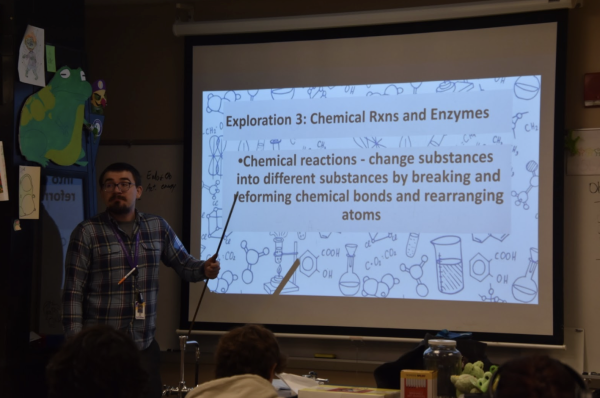
Now a teacher at the high school, LaPlante recalls several times they caught some of their own students using artificial intelligence alongside other search engines to cheat on their school work.
“It’s much easier to catch cheating now than it was when I went here,” LaPlante said. “Before, you had to walk around the classroom and watch the screens of every student to make sure they weren’t on other websites. Now, you can just use Apple Classroom to watch the screen’s activity, and Formative has the ability to show when a student switches tabs or copy and pastes.”
As a student at the high school, LaPlante found many of their peers coming up with creative ways to get away with cheating on assignments. However, that has proven to mitigate over time.
“Students nowadays aren’t sneaky with how they cheat,” LaPlante said. “They literally will sit there and just go back and forth from Google to the test when I’m literally watching them. I always give them the option to tell me the truth — then it’s less punishment if they don’t confess and lie to my face because, to me, direct disrespect goes beyond cheating.”
Though the policy hasn’t had many changes made to it over the years, technology has definitely played a huge role in the transformation of cheating and how quickly it can be discovered. Whether it’s a fancy calculator or ChatGPT, teachers at the high school continue to discourage the use of outside sources and press for honesty within the classroom.
“Learning comes with self discipline, and with cheating comes none of that. Be honest, get your stuff done, and be proud of work that is completely your own,” LaPlante said.