It’s the last week before the end of the first quarter. Some students feel relieved because of the approaching break, but to others, it’s impending doom. There’s only one thing separating some students from that shining ‘A’ on their report card: a mid-term project. They have a choice. They can start it right away, removing the worries that will inevitably come from doing it last minute, or they can simply disregard the inevitable stress and save it for the night before it is due.
Though these choices represent two opposite ends of the spectrum, most students fall at one or the other. The majority of these students seem to fall on the side of putting off the project. In favor of a more carefree present-self, these students sacrifice the happiness of their future selves — this is known as procrastination.
Ariela Manaj, 11, has experienced procrastination to a high degree.
“If it’s a Monday and I get an assignment due on Sunday, I’ll procrastinate and hold it off until maybe Thursday to start it,” Manaj said.
This doesn’t happen very often for Manaj, but it was not always this way.
“Freshman year, I was really bad because…I thought I had all the time in the world,” Manaj said. “Now as a junior, I realized things have moved way faster than I thought they would. It’s not as bad as it was before, but it’s still kind of rough.”
Manaj is not the only student who has experienced this. In fact, it is actually quite common for students to procrastinate at some point in their high school career.
“I think [during my] freshman year, I was a lot better at not procrastinating just because I had less stuff going on,” Ashlynn Smith, 12, said. “Now I don’t necessarily procrastinate a lot, but it’s definitely worse than it was freshman year just because I have college classes and activities.”
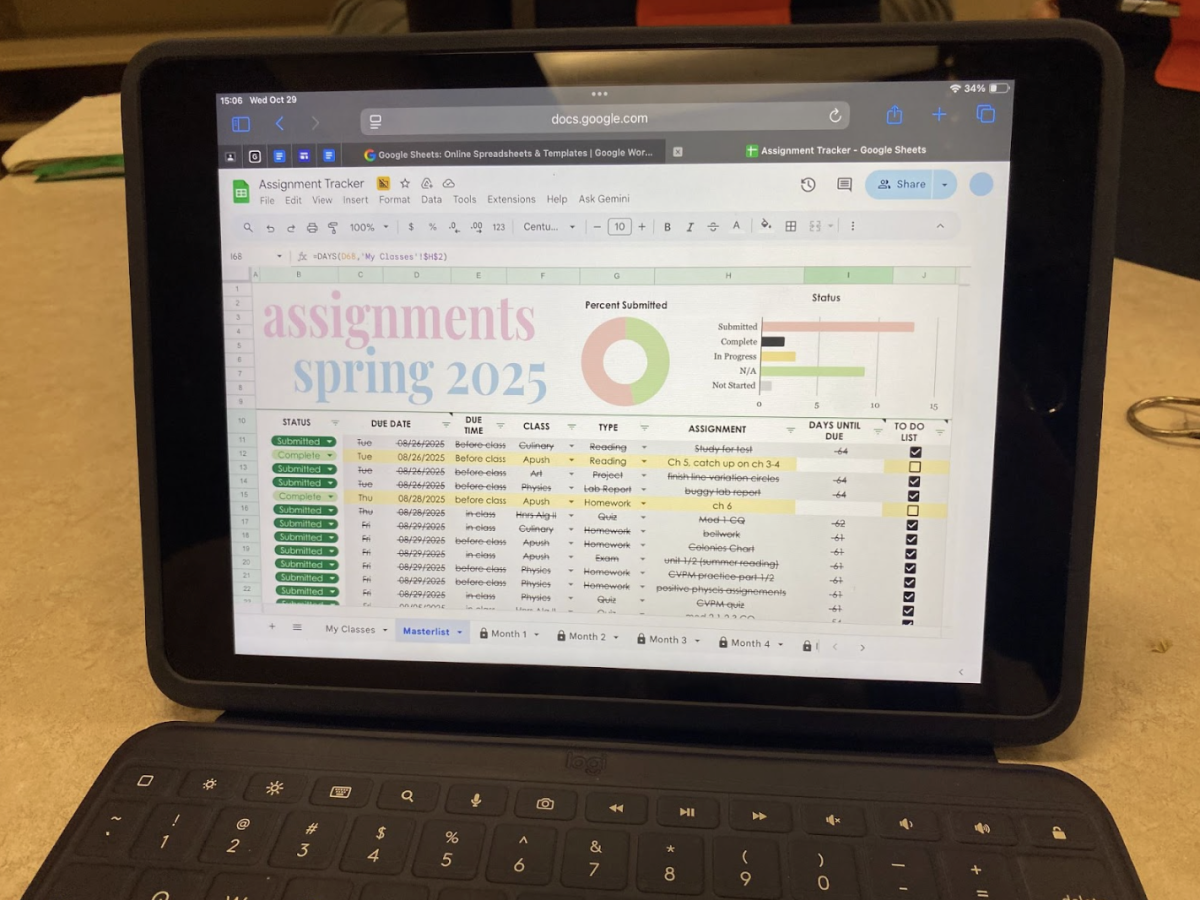
These changes year to year are what throw so many students like Smith off track. The same system some students used during freshman year often ceases to work by the time they are in their senior year. However, there are some that have found that the same system has worked throughout all four years of high school.
“I’ve always been a procrastinator, so it’s probably been the same [throughout high school] for me,” Macie Metcalf, 12, said.
Metcalf’s involvement in rigorous classes as well as school and club volleyball has provided many opportunities for procrastination, and they take these as they come. Though this approach definitely brings on more stress, it is concentrated into smaller moments. Thus, Metcalf is able to compartmentalize these times and focus on enjoying the daily routines of their life.
These differing approaches to procrastination show that there is no “right” way to tackle school work. Rather, everyone has a different tactic that works best.